
The Difference
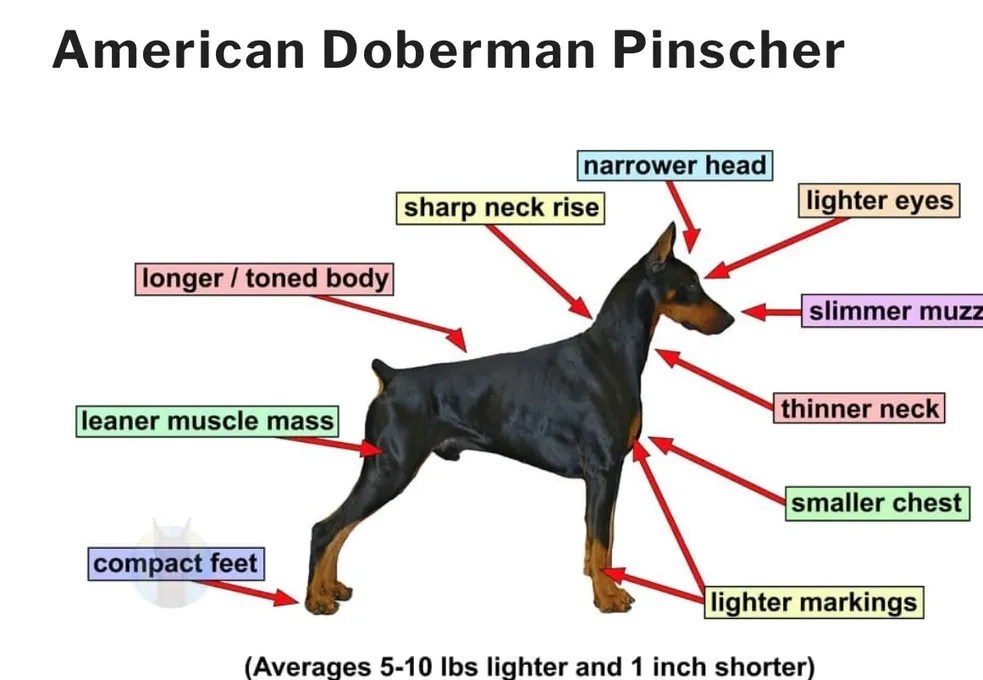
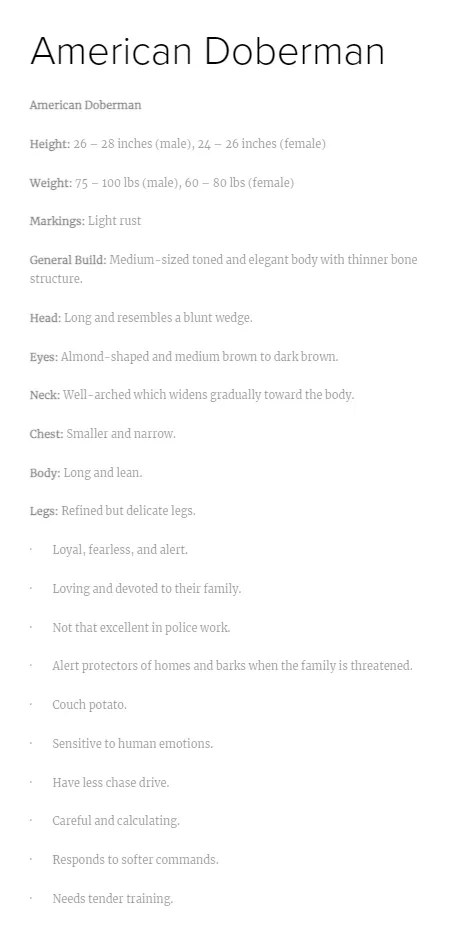
VS
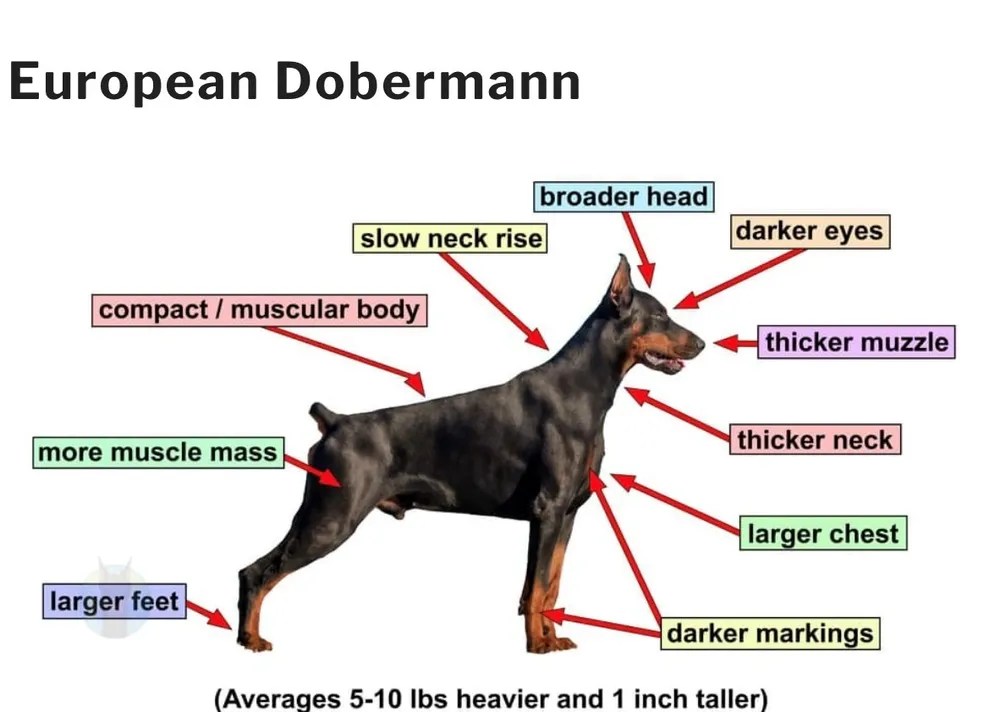
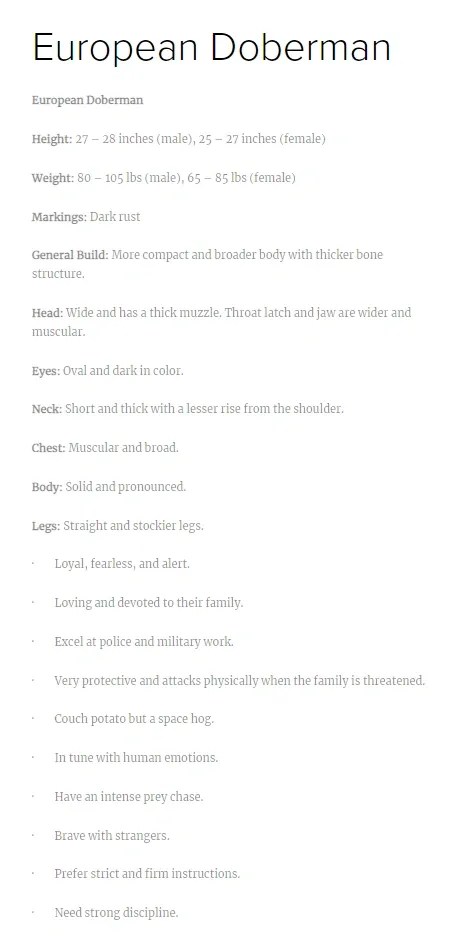
EUROPEAN DOBERMAN
Additional Information
The European Doberman is certainly different, both physically and temperamentally, from its American counterpart. Below are the main physical and temperamental traits that set them apart:
- Slightly larger (taller and heavier)
- More muscle mass
- Thicker overall bone structure
- Blockier, thicker head and snout
- Thicker, shorter neck
- Broad chest
- Slightly shorter body (in length)
- Darker colored eyes
- Darker colored rust markings
- Working dog temperament
- Lots of drive, determination, and stamina
- Brave
- Calm
- More alert
- Confident in new situations
- Responds well to clear and firm direction
- Height: Male: 26–28 inches, Female: 24–27 inches
- Weight: Male: 88–99 lbs, Female: 71–77 lbs
These elegant qualities, combined with a noble, wedge-shaped head and an easy, athletic way of moving, have earned Dobermans a reputation as royalty in the canine kingdom. A well-conditioned Doberman on patrol will deter all but the most foolish intruder.
The Doberman Pinscher is known to be elegant. They are athletic, intelligent, loyal and fearless. They are a courageous guard dog as well as affectionate, obedient and a beloved family companion.
They’re feared by those who don’t know them.
They are a formidable guardian, but are a gentle, watchful, and loving dog. Furthermore, they don’t go looking for trouble, but they’re fearless and will defend their family and turf if they perceive danger.
The Doberman is an energetic athlete who needs a lot of exercise and free play. A Doberman will enjoy going for long daily walks or hikes with his owner, and having a large fenced area where he can run is vital for his physical and mental well-being. Participation in canine sports such as obedience, tracking, and agility will provide exercise for mind and body and fun times together for dog and owner.
Dobermans are very intelligent, learn easily, respond quickly, and make loving and fun companions. However, they are very strong dogs and can become pushy, destructive, and unmanageable if not raised properly. Socialization starting in puppyhood is imperative, as is obedience training. Puppy training classes are highly recommended as well. It is every Doberman owner’s responsibility to ensure that the dog is raised to be a happy, well-mannered companion and canine citizen. The Doberman should always live inside the home with his people, rather than outdoors.
The Dobie enjoys being part of a family. They like to be close to those they love (They are a Velcro dog) and, when this love is present, they’re a natural protector. They’re trustworthy with their family’s children, friends.
The breed requires regular exercise, but needs only minimal grooming for their short coat.
Breed Suitability Test to Officially be classified as an European Doberman
To pass the Zuchttauglichkeitsprüfung (ZTP) or Breed Suitability Test for Dobermanns, several requirements must be met. Let’s delve into the details:
- Minimum Age:
- Participating dogs must be at least 15 months old.
- This ensures that the dog has matured sufficiently for evaluation 12.
- Membership and Proof:
- Both the owner and the handler of the Dobermann must be members of an IDC member country.
- They must provide proof of membership in either the DV (Dobermann Verein) or an IDC Member Club 1.
- Health and X-Rays:
- Dogs bred according to the DV breeding requirements and properly x-rayed for hip dysplasia are eligible.
- The results of the hip x-rays must be submitted on the day of the ZTP test 3.
- Obedience Test (BH):
- Successful completion of an obedience test (BH) is necessary.
- The BH test assesses the dog’s basic obedience skills 3.
- DNA-Based Identity Profile:
- Since March 1, 2011, a blood sample is taken from every participating dog during ZTP to establish a DNA-based identity profile.
- If the DNA analysis does not confirm the dog’s identity, the ZTP is declared void 1.
 DW Doberman Farm